
00后站在世界级创新舞台
栏目:行业新闻 发布时间:2025-12-29 10:30
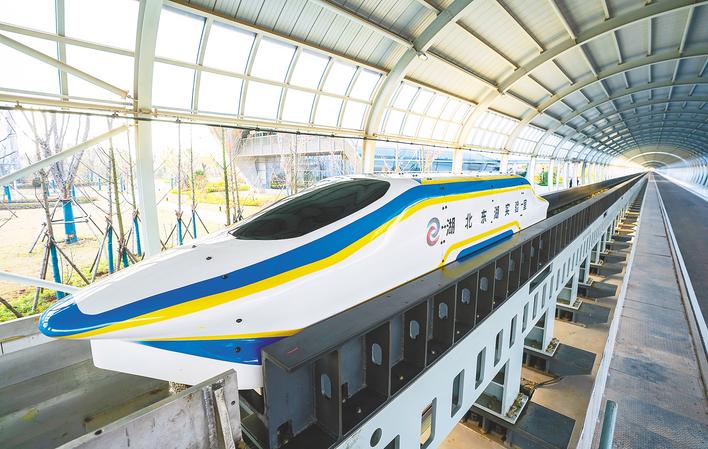 12月25日,湖北东湖实验室宣布,在该实验室自主研发的“一公里高速磁浮试验线”中,科研人员将一辆重1110公斤的高速汽车模型加速到时速800公里,仅用时5.3秒就安全停车,再次完成了世界级的创新。
磁悬浮测试线是如何研发的?创新团队中谁起主导作用?世界级创新背后有哪些不为人知的故事?带着这些疑问,12月26日,湖北日报全体媒体记者再次走进东湖实验室。
磁悬浮测试线采用电磁推进技术
12月26日,在湖北东湖实验室“一公里高速磁浮试验线”,科研人员将一辆重1110公斤的高铁模型车以时速800公里的速度加速并安全停下,再次完成了世界级的转移。信息。 (湖北日报全媒体记者韦热摄)
与今年6月和7月时速分别突破650公里和700公里时不同,测试线轨道上的负载从“块铁”变成了高铁模型车。
高速磁悬浮电磁推进技术创新中心主任李伟超表示,高铁模型车采用流线型造型,风阻系数更小,这是挑战时速800公里的必要条件。
控制器按下按钮,负载就出来了。站在距跑道10米远的地方,记者“晃动”了固定在跑道高度的摄像机,导致监控画面晃动,但仍感觉到一阵强风吹在脸上。
“前600米负责加速,后400米负责减速。不仅负载必须达到最大imum speed in a short time, but it must also stop safely in a short time." Li Weichao said that the test line uses electromagnetic propulsion technology, and the increase and decrease of speed places very high requirements on the efficiency, control accuracy, stability and safety of the whole system.
It is understood that during the construction and testing process of the test line, it has successively broken into many technical problems such as stable operation of the suspension guide under high-speed aerodynamic disturbances, suppression of thrust fluctuations of high-speed permanent magnet synchronous linear motors, and ultra-large-capacity multi-level variable frequency drive control.目前已实现稳态运行,满足验收条件。
世界级创新的背后是年轻的团队
Chen Xinyu, born in 2000, graduated from Southeast University in June this year and joined Donghu Laboratory on July 1. He is currently a scientific researcher in the electronic c“一公里高速磁浮试验线”控制组。
12月26日下午的演示中,陈新宇充当了“发令员”:高铁模型车什么时候准备测试、什么时候清轨、测试结束后什么时候回位,都是他“说了算”。
“加入东湖实验室的六个月里,我最大的收获就是视野的提升。我完全可以参与世界级的创新,这是我以前做梦也想不到的。”陈新宇说道。
张成宇也是00后。他毕业于新加坡国立大学,今年加入东湖实验室。分配到运行控制组工作,主要负责测试线电源系统的监控和管理,确保每次测试有充足的电力。
张成宇表示,加入东湖实验室就像扔一块干海绵进入知识的世界。 The ocean of knowledge, "This is not only a classroom, where I can learn knowledge that I cannot access on campus, but also a stage, where I have the opportunity to fully demonstrate my abilities."
据介绍,“一公里高速磁浮试验线”目前拥有全职员工20余人,其中包括毕业于华中科技大学的本土人才,从东南大学、哈尔滨工程大学招聘的外籍人才,以及毕业于新加坡国立大学的海外人才。 They are a team full of enthusiasm, dare to innovate, and can innovate.
李伟超表示,中国的电磁推进技术正在各批科研人员的攻关中,未来的发展需要更多的人才来支撑。 "East Lake Laboratory not only likes to make things, but also educate people. I hope that this young team will gain knowledge, increase their skills, and make contributions as soon as possible in the learning and training process."
“高速磁浮试验线”原规划仅400米长
一公里长的测试线完全被银色屋顶覆盖。 In the distance, apparentlya giant dragon lay beside Niushan Lake. (湖北日报全媒体记者韦热摄)
一公里长的测试线完全被银色屋顶覆盖。远处,牛山湖畔仿佛一条巨龙横卧。
与六月份第一次见到李伟不同,在达到了测试线设计的目的后,他脸上的表情更加轻松了。
谈话中,他透露了“高速磁浮试验线”建设过程中一些不为人知的故事。
The "high-speed maglev test line" was originally planned to be only 400 meters long. "If it is built at 400 meters, the space for increasing the speed will be limited and it will not reach the speed of 800公里每小时。它作为科研平台的能量水平将是有限的。”
这时,传来了东湖实验室正在建设中的好消息。在政府、大学等多方共同努力下,最终确定在一公里以内建设试验线!
2023年初,测试线将开始建设。接下来的两年里,队员们看着一台领先的科研装置在干旱的土地上逐渐“成长”。 “这种感觉就像看着自己的孩子快速成长,从爬行到站立再到奔跑。这让我有一种获得感和成功感。”李伟超说。
据了解,时速800公里只是“一公里高速磁浮试验线”的设计目标,并非其理论极限。 After achieving steady-state operation, the team will launch an impact at a speed of 900 kilometers per hour or even 1,000 kilometers per hourin due time.
结束前采访中,李伟超向记者坦言:“未来五年,我有两大梦想:一是在开放、合作、共享的平台上建设一条‘一公里高速磁悬浮试验线’,为东湖实验室内部和外部的研究需求提供硬核支撑;二是推动试验线应用和人们的成果从实验室走向生活经济领域。”
湖北日报全媒体记者李媛张景恒黄洁茹通讯员李慧
12月25日,湖北东湖实验室宣布,在该实验室自主研发的“一公里高速磁浮试验线”中,科研人员将一辆重1110公斤的高速汽车模型加速到时速800公里,仅用时5.3秒就安全停车,再次完成了世界级的创新。
磁悬浮测试线是如何研发的?创新团队中谁起主导作用?世界级创新背后有哪些不为人知的故事?带着这些疑问,12月26日,湖北日报全体媒体记者再次走进东湖实验室。
磁悬浮测试线采用电磁推进技术
12月26日,在湖北东湖实验室“一公里高速磁浮试验线”,科研人员将一辆重1110公斤的高铁模型车以时速800公里的速度加速并安全停下,再次完成了世界级的转移。信息。 (湖北日报全媒体记者韦热摄)
与今年6月和7月时速分别突破650公里和700公里时不同,测试线轨道上的负载从“块铁”变成了高铁模型车。
高速磁悬浮电磁推进技术创新中心主任李伟超表示,高铁模型车采用流线型造型,风阻系数更小,这是挑战时速800公里的必要条件。
控制器按下按钮,负载就出来了。站在距跑道10米远的地方,记者“晃动”了固定在跑道高度的摄像机,导致监控画面晃动,但仍感觉到一阵强风吹在脸上。
“前600米负责加速,后400米负责减速。不仅负载必须达到最大imum speed in a short time, but it must also stop safely in a short time." Li Weichao said that the test line uses electromagnetic propulsion technology, and the increase and decrease of speed places very high requirements on the efficiency, control accuracy, stability and safety of the whole system.
It is understood that during the construction and testing process of the test line, it has successively broken into many technical problems such as stable operation of the suspension guide under high-speed aerodynamic disturbances, suppression of thrust fluctuations of high-speed permanent magnet synchronous linear motors, and ultra-large-capacity multi-level variable frequency drive control.目前已实现稳态运行,满足验收条件。
世界级创新的背后是年轻的团队
Chen Xinyu, born in 2000, graduated from Southeast University in June this year and joined Donghu Laboratory on July 1. He is currently a scientific researcher in the electronic c“一公里高速磁浮试验线”控制组。
12月26日下午的演示中,陈新宇充当了“发令员”:高铁模型车什么时候准备测试、什么时候清轨、测试结束后什么时候回位,都是他“说了算”。
“加入东湖实验室的六个月里,我最大的收获就是视野的提升。我完全可以参与世界级的创新,这是我以前做梦也想不到的。”陈新宇说道。
张成宇也是00后。他毕业于新加坡国立大学,今年加入东湖实验室。分配到运行控制组工作,主要负责测试线电源系统的监控和管理,确保每次测试有充足的电力。
张成宇表示,加入东湖实验室就像扔一块干海绵进入知识的世界。 The ocean of knowledge, "This is not only a classroom, where I can learn knowledge that I cannot access on campus, but also a stage, where I have the opportunity to fully demonstrate my abilities."
据介绍,“一公里高速磁浮试验线”目前拥有全职员工20余人,其中包括毕业于华中科技大学的本土人才,从东南大学、哈尔滨工程大学招聘的外籍人才,以及毕业于新加坡国立大学的海外人才。 They are a team full of enthusiasm, dare to innovate, and can innovate.
李伟超表示,中国的电磁推进技术正在各批科研人员的攻关中,未来的发展需要更多的人才来支撑。 "East Lake Laboratory not only likes to make things, but also educate people. I hope that this young team will gain knowledge, increase their skills, and make contributions as soon as possible in the learning and training process."
“高速磁浮试验线”原规划仅400米长
一公里长的测试线完全被银色屋顶覆盖。 In the distance, apparentlya giant dragon lay beside Niushan Lake. (湖北日报全媒体记者韦热摄)
一公里长的测试线完全被银色屋顶覆盖。远处,牛山湖畔仿佛一条巨龙横卧。
与六月份第一次见到李伟不同,在达到了测试线设计的目的后,他脸上的表情更加轻松了。
谈话中,他透露了“高速磁浮试验线”建设过程中一些不为人知的故事。
The "high-speed maglev test line" was originally planned to be only 400 meters long. "If it is built at 400 meters, the space for increasing the speed will be limited and it will not reach the speed of 800公里每小时。它作为科研平台的能量水平将是有限的。”
这时,传来了东湖实验室正在建设中的好消息。在政府、大学等多方共同努力下,最终确定在一公里以内建设试验线!
2023年初,测试线将开始建设。接下来的两年里,队员们看着一台领先的科研装置在干旱的土地上逐渐“成长”。 “这种感觉就像看着自己的孩子快速成长,从爬行到站立再到奔跑。这让我有一种获得感和成功感。”李伟超说。
据了解,时速800公里只是“一公里高速磁浮试验线”的设计目标,并非其理论极限。 After achieving steady-state operation, the team will launch an impact at a speed of 900 kilometers per hour or even 1,000 kilometers per hourin due time.
结束前采访中,李伟超向记者坦言:“未来五年,我有两大梦想:一是在开放、合作、共享的平台上建设一条‘一公里高速磁悬浮试验线’,为东湖实验室内部和外部的研究需求提供硬核支撑;二是推动试验线应用和人们的成果从实验室走向生活经济领域。”
湖北日报全媒体记者李媛张景恒黄洁茹通讯员李慧 上一篇:“太空鼠”当妈妈了!
下一篇:没有了